Beth Godfrey was one of the hopeful competitors at a speciality coffee championship in Belfast
Coffee lovers from across Northern Ireland gathered for a caffeine-fuelled competition in October.
It is for connoisseurs of a speciality coffee and a heat took place in Belfast’s Cathedral Quarter with 36 competitors battling it out to produce the best cup.
It turned out Ben McKendry made the best cup and he will now represent Northern Ireland at this year’s world final in Canada in December.
Our high streets are full of coffee shops and whether it is a flat white or frappe, consumers are spoilt for choice.
A panel of industry experts vigorously tasted and scored each brew
Now in its 14th year, the World Aeropress Championship sees 3,000 competitors from 60 countries demonstrate their recipes, each one unique.
Operating much like a handheld French press, the Aeropress coffee maker was invented in 2005 by retired Stanford University engineering instructor Alan Adler.
To operate, the brewer adds ground coffee and hot water before plunging the liquid through a filter. Simple enough? Apparently not.
It is the variables that make all the difference – water temperatures, coffee weight and grind size, brew time and even how long you stir can all dramatically alter the final brew.
Adam Henry, who travelled from Coleraine for this year’s regional heat wanted to experience a more intense coffee environment.
Hannah Harry said she wanted to compete to show speciality brewing did not have to be so serious
This year’s heat brought a large crowd of spectators, who watched the competitors mathematically approach the task in hand.
The winners of each round made it through to the next knockout stage, each one more meticulous than the last.
The coffee industry is continuously evolving. Coffee lovers and manufacturers find new ways to consume and sell this popular beverage all the time. New ideas spur new trends every year, and it can be challenging to keep up with what’s popular.
We’ve outlined some of the hottest current coffee trends to keep an eye on this year and beyond.
While coffee lovers shopping your products or ordering a beverage from your shop wouldn’t request instant coffee, they may be interested in its use for dalgona coffee. The name for this unique drink comes from a Korean honeycomb toffee, but you won’t find that ingredient in the recipe. Instead, dalgona coffee mimics the light texture of honeycomb toffee — thanks to the whipped instant coffee, sugar, and water used to make it.
Dalgona or whipped coffee went viral in 2020 as one of the top TikTok coffee trends, with millions of shared videos across different social media platforms showing how to prepare the frothy drink. Its unique texture and sweet flavor exploded its popularity, which is why it remains one of this year’s favorite coffee trends.
Whip equal parts of instant coffee, sugar, and hot water together to make dalgona coffee. Those making this drink often use one or two tablespoons for those ingredients, depending on how large a serving they want. Most opt for an electric mixer to make the process easier since it takes anywhere from two minutes to five minutes to create the right consistency.
The goal is to create a light, whipped coffee that’s somewhat similar to a dense whipped cream. The mixture is served over milk, sometimes with ice. To add to the presentation and enhance the flavor a bit, some sprinkle the top with cocoa, coffee powder, or crumbled cookies. Dalgona coffee is typically served with a straw to stir the whipped coffee concoction into the milk.
WHY IS DALGONA COFFEE POPULAR?
This coffee customer trend rose in popularity thanks to its social media presence and simplicity to prepare. You don’t need special equipment other than a whisk or electric mixer, which most people have already. It also puts instant coffee to good use, transforming it from a coffee quick-fix to a sweet, trendy beverage. To cater to this trend, you may consider adding instant coffee to your inventory or order it for your coffee shop business.
2. SNAPCHILLED™ COFFEE
Snapchilled Coffee
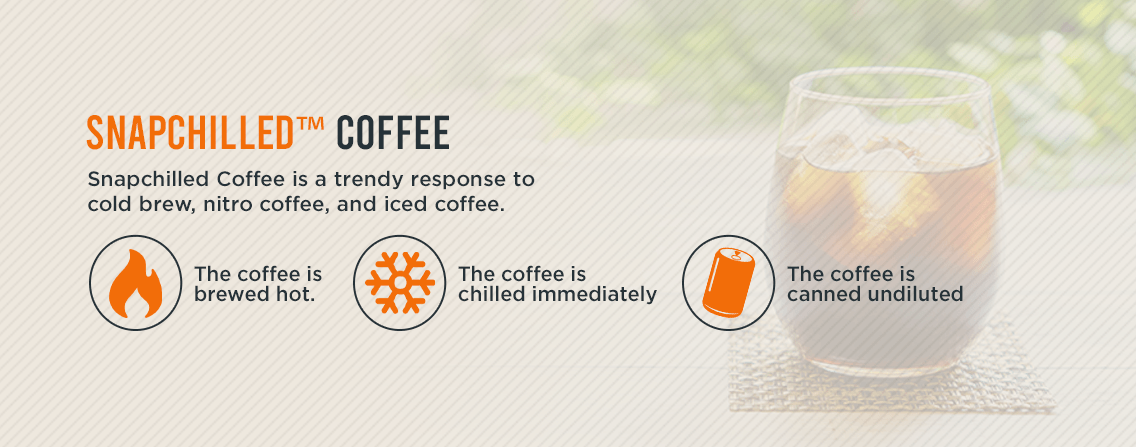
Snapchilled Coffee is a trendy response to cold brew, nitro coffee, and iced coffee. This product takes freshly brewed hot coffee, “snapchills” it, and cans it. You’ve likely seen premade coffee drinks in bottles and cans, so what makes this such a popular coffee? The snapchilling process preserves freshness and flavor in a way other bottling and canning processes can’t. Here’s how and why it works:
The coffee is brewed hot. Hot water helps Snapchilled Coffee manufacturers extract all the right flavors for an authentic brewed coffee taste. The result is a can of coffee that tastes freshly brewed.
The coffee is chilled immediately. Other coffee chilling processes take hours. Freezing, refrigerating, or adding ice can ruin the coffee’s flavor. When Snapchilled Coffee manufacturers chill the coffee immediately, they lose less flavor.
The coffee is canned undiluted. When you have iced coffee, the ice eventually melts, diluting the beverage and ruining the flavor. Snapchilled Coffee is brewed to the right strength, so there’s no need to add anything to it. Because it’s canned, it won’t lose any flavor being transported from the factory to stores to the customer.
WHY IS SNAPCHILLED COFFEE POPULAR?
Cold coffee beverages have been increasing in popularity for a while now. Combine that with the also rising popularity of premade coffee drinks that are easy to pick up on the go, and you have demand for a flavorful grab-and-go cold coffee. Snapchilled Coffee serves as a response to these coffee trends. It comes in various roasts and flavors, giving every coffee lover something they could enjoy.
3. NITRO COLD BREWS
As another entrant into cold coffee industry trends, nitro coffee takes cold brew to a new level. Nitro cold brews saw a rise in popularity a couple years ago, and the trend is only expected to increase in popularity in next few years. The beverage uses a process previously used by beer home brewers, infusing nitrogen gas into the coffee through a pressurized valve.
Nitro Cold Brew
The nitro coffee process begins with cold brew, which is coffee that’s been steeped in cold or room-temperature water for anywhere between 12 hours and 24 hours. A pressurized valve then infuses the coffee with nitrogen gas, adding small bubbles that improve the coffee’s flavor and texture. These bubbles are smaller than what you’d find in soda, meaning nitro cold brew doesn’t taste fizzy or carbonated. If you want to offer nitro cold brew at your business, start with coffee beans and don’t forget all the other necessary equipment.
While nitro coffee isn’t necessarily cheap or simple to prepare, its popularity makes it worthwhile, and so does the price. Customers are willing to pay for this beverage despite higher costs.
WHY ARE NITRO COLD BREWS POPULAR?
On their own, nitro cold brew canned drinks often have no sugar or less than what other coffee beverages have. That gives them a health appeal of fewer calories compared to different beverages. Nitro coffee is also among coffee trends because of how it tastes, with qualities including:
Less bitter flavor
Smoother texture
Creamier flavor
Coffee lovers and younger coffee drinkers alike love those qualities, meaning nitro coffee is popular across different groups of customers.
4. MATCHA LATTES
You might have noticed this green beverage among upcoming coffee shop trends. While a coffee latte has espresso, steamed milk, and foam, a matcha latte combines green tea powder, water, and milk. The beverage doesn’t deliver quite as much caffeine as its coffee counterpart, but some consider it to provide a cleaner caffeine boost than coffee.
Iced Matcha Latte
Matcha has been around for more than a thousand years, but matcha lattes have only become popular in recent years. They are expected to rise among other coffee trends this year. The beverage starts with matcha powder, which is made from ground leaves of certain green tea plants. A barista blends that powder with water to create a paste. They then add steamed milk, and can even create latte art as they would on a traditional coffee version.
Matcha powder can come sweetened or unsweetened. For unsweetened varieties, a barista can add sweetener or honey to the latte based on the customer’s preference. They’ll also base the type of milk and how much they use on what a customer wants.
WHY ARE MATCHA LATTES POPULAR?
The main reason matcha lattes are among the top 2022 coffee trends despite lacking coffee is their potential health benefits. Many coffee drinkers have an increasingly health-conscious mindset, and green tea provides different possible health benefits. More customers are choosing matcha lattes because they:
Contain antioxidants
Contain fiber
Are a good source of vitamin C and other vitamins
Those attributes mean matcha and matcha lattes can reduce bad cholesterol, protect the liver, improve brain function, and provide other benefits.
5. READY-TO-DRINK COFFEE
Ready-to-drink (RTD) coffee encapsulates various coffee industry trends. RTD beverages are any type of drink that would normally involve mixing or preparation, like coffee. Manufacturers pre-prepare these drinks. RTD coffee is canned or bottled, already brewed, flavored, and sweetened. These ready-to-drink beverages appear anywhere from grocery store check-outs to convenience stores and even coffee shop refrigerators. All the customer has to do is pick their favorite variety and enjoy.
Emerging coffee brands and large manufacturers alike are entering the RTD market. It’s estimated that by 2022, the RTD market will generate 3.1 billion U.S. dollars.
WHY IS READY-TO-DRINK COFFEE POPULAR?
RTD coffee is a popular grab-and-go option. Its biggest appeal is its convenience, since customers don’t have to brew their own coffee or wait in lines at a coffee shop for a barista to prepare their drink. Instead, all they have to do is pick what brand and flavor they want. Because RTD coffees are refrigerated, they also fall into the increasingly trendy category of cold coffee drinks.
6. PLANT-BASED, NON-DAIRY MILKS
If you have been to a coffee shop lately, you may have noticed more milk options than the usual skim or whole. Plant-based, non-dairy milks are among the newest popular coffee additions. That means anyone who doesn’t take their coffee black can now choose a non-dairy alternative to milk. And coffee drinkers have certainly been taking advantage of these alternatives.
In 2020, the market size value for non-dairy milks in general was 18.81 billion U.S. dollars. This is expected to expand to 41.06 billion U.S. dollars by 2025, showing the non-dairy milk trend is here to stay. Trends for the non-dairy milk market translate to the coffee industry, with large and local coffee shops offering various plant-based milk options. Among the non-dairy milks to rise in coffee shop trends are:
Almond
Soy
Oat
Coconut
Hemp
Macadamia nut
WHY ARE NON-DAIRY MILKS POPULAR?
A combination of the growing lactose intolerant and vegan populations, along with other dietary and health concerns, has helped non-dairy milks rise in popularity. Vegan or lactose intolerant individuals no longer have to drink coffee black, and can instead add plant-based milks to their drinks.
Non-dairy milks can also sometimes provide more flavor than standard milk or cream. These plant-based milks come in sweetened and pre-flavored options, too, acting as flavored creamers or syrups for coffee. If you run a coffee shop, consider expanding your offerings to include non-dairy milks.
7. AT-HOME COFFEE TRENDS
The pandemic changed the majority of customers’ coffee regular consumption habits, with 85% of coffee drinkers enjoying one to two cups at home on average. Even with the shift to return to the office and in-person socializing, many have grown accustomed to their new at-home routines in 2022 — coffee time included.
This isn’t to say customers don’t love the coffee shop experience or customized drinks — they just want to emulate the at-home barista experience in the comfort of their own homes.
WHY ARE AT-HOME COFFEE TRENDS POPULAR?
Coffee industry statistics show nearly one-quarter of Americans purchased a new home coffee machine in 2020, including single-cup brewing systems. Even with a growing increase in coffee shop visits and at-work brewing station accessibility this year, most customers want to maintain the convenience and cost savings of their home coffee machine investment.
8. HEALTHY COFFEE TRENDS
In addition to matcha coffee and non-dairy milks, customers have health-focused blends of coffee on their radar this year. Customers show a growing interest in customized blends and coffee additives that support gut health, improve immune systems, boost metabolism and increase energy:
Incorporate health-focused additives. We can craft custom blends with additive ingredients for your health conscious customers— supplements, vitamins, minerals, herbs, cognitive-enhancing nootropics and more.
Consider collagen mix-ins. Customers interested in improving skin complexion, increasing hair and nails length, and relieving joint pain are turning to the growing trend of collagen peptide coffee mix-ins.
Target espresso for the turmeric latte trend. Design delicious espresso blends for customers who blend turmeric, almond milk, honey, cinnamon, ginger, pepper and coffee to create this trending low-calorie, antioxidant-packed drink for reduced inflammation and improved brain function.
Market mushroom coffee. This delicate combination of ground medicinal mushrooms and dark coffee beans produces a smooth, nutty brew with a unique marketing edge of improved immunity and reduced anxiety health benefits.
Benefit from bulletproof coffee. Create high-quality blends for Keto and low-carb diet customers who combine coffee, unsalted grass-fed butter, and a medium chain triglyceride (MCT) like coconut oil to create this high-calorie drink for energy and focus.
What’s Goa without its lovely cafes with lazy dogs and warm cakes? Now whether you’re on the hunt for an all-day breakfast, a bowl of comforting pasta, a quick sandwich or that perfectly brewed coffee overlooking the beach, we’ve curated a list of the best cafes in Goa for you.
If you’re a fan of health food, fresh ingredients and smoothies that can cure the worst of hangovers, look no further than Prana Cafe. Tucked away right at the mouth of Vaayu Waterman’s Village in Ashwem, it lets you enjoy a panoramic view of white sands and clear blue waters, while sipping on your smoothie or that perfect cup of Sunday morning coffee. Their fresh juices, salads, locally sourced pasta and sandwiches make for a filling, soul-satiating meal. We love their quinoa avocado stack, homemade lemonade and cous cous hummus salad. The cafe also has an in-house art gallery which displays art from local artists, books and there are board games to make it the perfect spot to spend an afternoon with friends.
A beautiful vegetarian cafe overlooking Anjuna beach, that feels like a slice of Greece right in the heart of North Goa, Eva Cafe is perfect for a breakfast bowl or an evening date with some wine and that warm sunset glow. Thanks to its location, it even allows you to walk down to the rocks below and dip your toes in sea water. Dressed in all-white, with lots of crochet, wooden furniture, deck chairs and an all-out boho vibe, it’s an Instagram delight. We love to grab the chairs that overlook the beach and sip coffee for hours. Their menu is no-frills with a variety of sandwiches, pasta, juices, crepes, museli, eggs, salads and more.
A hidden gem of a cafe that almost convinces you that you’re in the hills, Mojigao has some of the best coffee in town. The cafe has refreshing fresh juices, as well as a delicious homemade cheese platter. Surrounded by giant trees, chirping birds and a large open space where you can relax with your sandwiches or a plate of hummus and homemade pita, Mojigao despite being one of the newer spaces easily is amongst the best breakfast joints in North Goa. With a bookshelf housing books by Murakami, Wodehouse along with Hardy Boys, all one needs is a cup of cortado and all the time in the world!
Located in an old Goan house, with walls that are stacked with piles of books, it’s almost impossible to be sad here. A quaint bookstore and cafe, there are wooden shelves everywhere you look, with books from different parts of the world — new arrivals, bestsellers, fiction, non-fiction, so if you are looking for a laid back evening, you know where to go. The bookshop also has a cafe alongside, where you can get yourself a cup of hot coffee and snacks to read along with those books.
A biker’s paradise, Royal Enfield garage Cafe is a cool cafe that is the meeting point for bikers, travellers, foodies, history buffs or people who simply want to learn something new about travel or biking. Pick up some cool biking gear, browse through RE memorabilia, listen to some of the finest live bands, down some chilled craft beer… This garage cafe has it all. They’ve got both: an al-fresco seating and an air-conditioned indoor space for when it pours (or gets unbearably hot) but you want a relaxing cuppa and a pizza or some fresh salad.
Althino hilltop houses The Sunapranta Centre For Arts, which has one of the loveliest cafe-cum-restaurants in Goa — Cafe Al Fresco by Cantina Bodega. An eatery adorned with beautiful Al Fresco dining in a Portugese villa courtyard, where you can have a hearty breakfast surrounded by greenery and art. Try their kombucha (a variety of fermented, lightly effervescent sweetened black or green tea, that is a favourite local summer drink) or one of their delicious bakes and enjoy a perfect summer evening. Another plus are their hearty portions. You can order a plate of mushroom garlic pasta and cheese fries and be done for the day. While you’re there, look out for the attached art gallery, they always have some art on display.
A cafe that combines skill-building opportunities alongside a cafe that feeds you waffles, sandwiches and shakes, Carpe Diem hosts a range of activities and workshops from dance to pottery, yoga to theatre, art exhibitions to book readings. Located in Majorda, in South Goa this cafe becomes the hub of activity — they’ve also got tonnes of paintings and artworks for you to enjoy and take home. In fact, it’s a good place to pick up souvenirs for folks back home.
Healthy vegetarian and vegan food at its best, Cafe Zest creates an utterly relaxing and unbelievably uplifting experience. They add a special zing to the food that easily takes takes the boring out of the vegetarian — everything from the pastas, coffee, smoothies, salads, wraps and sourdough toasts, are delicious, though their scrambled eggs with goat cheese deserve a special mention, as does their chia seed pudding. While on your way out you can also check out the collection of chic indie clothes, bags and home decor at their in-house store Bunti.
Jaali Boutique & Cafe has been one of Patnem’s most gorgeous garden restaurants. Their food here, made from the freshest ingredients, is a mix of Mediterranean, Middle-Eastern and European. The in-house shop curates treasures from all over India and is a true delight to browse. In true mezze style, the Jaali peeps encourage sharing plates and their serving size ensures that there’s enough room for you to try more than one thing on the menu. Our favourites include: Martinis, cauliflowers in tahini, seafood dishes and messy eggs.
Combining the best of both worlds, Baba Au Rhum is a part traditional French cafe, part Goan fusion food. Run by two French locals, their croissants, fruit salads and pizzas are very popular with the local French community. Tucked away from the main road, the cafe overlooks lush paddy fields and is one of the best breakfast/brunch places around. And if you’re a steak person, they offer some of the best medium to medium-rare steaks you’ll find in Goa!
Have you also been witnessed a sudden interest in the age-old ‘fenti hui coffee’? If yes, then you must be wondering what is this Dalgona Coffee and why there is a sudden demand for it? Made popular by South Korean actor Jung-II Woo, it went viral recently on a social media portal.
Dalgona Coffee is nothing but your old beaten Indian coffee with a twist! The only difference is that the beaten coffee is made with hot milk while Dalgona Milk is made with cold or chilled milk. It’s called so because of the toffee-like texture of South Korean honeycomb toffee candy. If you are wondering it’s difficult to make, then worry not! All you need is the equal amount of coffee, sugar and water and beat them well. Add it to chilled milk and pour whipped cream over it and you are good to go. Here is an easy way to make this amazing coffee recipe at home.
Ingredients of Dalgona Coffee
2 tablespoon coffee powder
2 tablespoon boiling water ice cubes as required
2 tablespoon sugar
2 cup cold milk
How to make Dalgona Coffee
Step 1 : Make coffee mixture
To prepare this delicious coffee, take a bowl and mix equal quantities of coffee powder, sugar and hot water.
Step 2 : Beat coffee mixture using whisker or hand blender.
Now, using a whisker or hand blender, blend the coffee mixture until it is light, frothy and creamy. This might take a good amount of time.
Step 3 : Prepare the Dalgona Coffee
Now, take 2 glasses or coffee mugs and add ice cubes in it as per your convenience. Pour cold milk in them and add this beaten and whipped coffee over it. Serve chilled.
Tips
First and foremost rule of making Dalgona Coffee is that use high-quality coffee powder for beating. The colour of your coffee will depend a lot on the richness of coffee powder.
We have used very cold milk for making this coffee sans any sugar or a hint of sweetness. Depending on your taste, you can sweeten your milk using a little condensed milk or sugar…
Last, but not the least, you can store your whipped coffee for a week in an air-tight container.
Cover your tea leaves and sage with 1 to 1 1/2 cups of just boiled filtered water. Cover and steep for 3 to 5 minutes. Be careful not to steep longer as black tea can grow quite bitter.
Strain the tea into a blender and add the cashew butter and honey (or other sweetener) to taste. Blend until smooth and frothy. Pour into your favorite mug and enjoy!
You’ve heard of vanilla lattes, but your daily fix may be even more basic than previously thought. Coffee is practically a universal language unto itself, enjoyed in a variety of ways around the globe, from being blended with tea to being topped with an egg custard. Luckily, you don’t need a passport to step out of your coffee comfort zone, as these Chicago spots offer some worldly alternatives.
1) Vietnamese vanilla custard coffee, Ca Phe Da
When Ca Phe Da owner Thai Dang traveled through northern Vietnam, he fell in love with egg custard coffee, a drink with French colonial influences. When Vietnamese people were working with French chefs during the country’s French occupation, they saw the chefs making sabayon, a ultra-whipped light custard. At HaiSous, Dang uses a double boiler to whip egg yolks with Tahitian vanilla bean and condensed milk. Then, once the mixture gets to a certain temperature, it’s put into an iSi charger — similar to a whipped cream can— and dispensed onto the coffee, which Dang sources from his sister-in-law, who owns a coffee roaster an hour northeast of Ho Chi Minh City. The coffee is made Vietnamese-style, with a filtration drip system called a phin, similar to a pour-over. When you mix the drink, Dang describes it as having your favorite coffee ice cream warmed up.
2) Ethiopian coffee ceremony
An Ethiopian coffee ceremony will take at least a few hours, but that’s the point. It’s conducted for groups and used as a means to connect, bless and attract luck for the participants. The ceremony starts with washing green coffee beans before roasting them over open flame. While the beans roast, the person conducting the ceremony — usually a woman in traditional Ethiopian dress — walks around the group of people hold the hot pan, wafting the smoke and aroma through the room. To bring more good luck upon yourself, you should fan the smoke toward you, suggests Selot Zewdie, owner of Buna Time Cafe. (Buna Time Cafe recently closed its storefront but Zewdie is planning on opening another. In the meantime, she’s creating home kits so people can conduct the ceremony themselves.) Next, the beans are ground as finely as espresso, and added to a jebena, a clay spouted container, with water and placed back on the flame. While the coffee brews, guests traditionally munch on popcorn, peanuts or other similar snacks while waiting. The jebena is removed when it starts steaming. It’s placed on a holder, tilting the container for a few minutes so the water separates from the grounds. The coffee is served with sugar, salt or butter and is enjoyed in three rounds, signifying luck, wealth and health. “It’s a process that brings people together,” said Zewdie.
3) Turkish Coffee, Oromo Cafe
The best thing about coffee traditions is the invitation to linger, allowing people time to connect over the drink. The Turkish method does exactly this, with multiple steps and special glassware to make the seemingly mundane act of sharing a cup of coffee a meaningful one. Coffee beans are ground to a fine powder and brewed with water in a cezve, a long-handled copper pot. Sugar is added during the brewing process, and the mixture can also be spiced. When the liquid begins to boil, the coffee is poured into small cups. When the drinks are finished, the grounds left behind can be used for fortune telling. 4703 N. Lincoln Ave., 773-799-1931, oromocafechicago.com
4) Mexican Cafe de Olla, La Catedral Cafe & Restaurant
Cafe de olla is a coffee drink popular in Mexico. (La Catedral Cafe & Restaurant)
When people say Mexican coffee, they probably mean cafe de olla, a traditional drink made in a large earthenware vessel called an olla. The coffee has to be from Mexico, said Ambrocio Gonzalez, owner of La Catedral Cafe & Restaurant, and starts with steeping cinnamon sticks in boiling water before adding the coffee. Piloncillo, an unrefined whole cane sugar that comes shaped like a cone, is added to sweeten the drink. The City of Chicago banned the olla clay pots because of lead concerns, so the drink is made differently and served in a ceramic mug.
5) Coffee Milk Tea, Te’Amo Boba Bar
Tea is enjoyed with milk in many traditions, but in Hong Kong, coffee is added to traditional milk tea — strongly brewed tea with evaporated or sweetened condensed milk — for a drink that’s enjoyed at any time during the day. The rich black tea is mixed with Nespresso and evaporated milk to create a creamy, strong caffeinated drink. The resulting drink retainsthe floral elements of the tea and the bitter, fruity elements of the coffee. The beverage is most commonly enjoyed during breakfast, although it’s almost just as likely to be consumed in the afternoon and late evenings.
6) Japanese coffee jelly, Saint’s Alp Teahouse & Gourmet
When you just can’t get enough coffee, try adding more coffee to your coffee… with coffee jelly! (Hashtag caffeine, as the youths say.) Made with sweetened coffee and agar, the small cubes sit at the bottom of your hot or iced coffee, adding some texture to your coffee drinking experience. You’ll also find it eaten cold with condensed milk or cream as more of a summer dessert.
7) Colombian-style coffee, ArePa George
“Colombian coffee should be sour,” says Juan Betancourt, owner of ArePa George. ArePa George serves a number of coffee drinks from Colombia, including a regular Colombian coffee served black and con leche, roughly 90 percent coffee, 10 percent milk and a touch of sugar. But what coffee connoisseurs should ask for is the Cafe Quindio brand from the heart of Colombia. You’ll get a tiny cup of the tart Columbian coffee ($5) that is the real deal, Betancourt said. After all, the restaurant gets it straight from Betancourt’s family in Colombia.
Bangkok is busy, hectic, humid, and intense – and when you’re out pounding the streets, seeing the sights or shopping the markets, there’s just no escaping it. That is until you walk into a cool, chic coffee shop serving refreshing drinks, excellent coffee and perhaps even some quality food, pastries and cakes. Whether it’s for a quick iced latte to-go or a long lazy morning to relax, these coffee shops will please even the most high brow, single origin, organic coffee fans.
Rocket Coffeebar S.12
Offering both indoor and outdoor seating, this modern coffee shop can be found in Silom and has a friendly atmosphere with a European feel. You can’t go wrong with any of the coffee choices, whether it’s a flat white, iced latte, or one of their specials like the dark chocolate and orange iced coffee. But, if you’re feeling really thirsty it’s hard to beat ‘the hydration’ – coconut water with fresh mint, cucumber and watermelon. They also do a tasty, natural food menu.
Roots Coffee
A lot of care goes into each cup of coffee here, and you’d be hard pressed to get away with just ordering “a coffee”. From farming to house roasting beans, every detail is thought out with care. The baristas are extremely knowledgeable, maybe even borderline nerdy and are always happy to talk coffee – with your coffee. With three locations in Bangkok, you’ll hopefully find yourself close enough to try at least one.
Theera Healthy Bake Room
If you’re health conscious or have special dietary requirements, then this is definitely the place in Bangkok for you. There’s vegetarian, vegan, gluten free, dairy free and more, but fortunately – not flavor free. The exquisite coffee is enhanced by an extensive list of alternative milks, creams and other substitutes, and when you choose to eat, healthy choices are everywhere. This gem in Ekkamai is worth it, whatever your diet.
Luka Bangkok
Come here for brunch, not just the seriously on point coffee. This artsy coffee shop has a hip vibe, excellent service and a brunch menu to die for. Luka offers an excellent selection of both coffees and teas, and the food tends to come out looking picture perfect. Also found in Silom, it’s located close to Rocket Coffeebar S.12, so why not hit them both in one trip – you can never have too many iced lattes!
Kaizen Coffee Co.
This clean, modern coffee shop was set up by three coffee loving friends and there’s definitely a lot to love here. Kaizen is most well known for their nitro-brewed coffees, addictive sandwiches and rich desserts, and it’s absolutely worth a stop next time you’re in Bangkok, Ekkamai to be precise.
Sretsis Parlour
This one is more for your Instagram account than the actual quality of the coffee, but hey the coffee is solid too. The bright colors and creative designs make you feel like you’re in a Wes Anderson movie set, but that’s not all you’ll be taking pictures of. The coffees will appear with pictures of unicorns, lions and other quirky designs worked into the foam. Naturally, in a place that looks like a posh tea shop, you’d expect cakes – and there are plenty of those to be found too.
A tiny, cult Tokyo coffee shop has come to Bangkok.
Omotesando Koffee, the tiny Tokyo cafe tucked in a traditional Japanese house that found an international cult following, has opened in Siam Paragon.
After starting life in 2011 in a residential backstreet of Tokyo’s upscale Omotesando shopping district, the cafe’s business model set it apart from the dime-a-dozen coffee chains: from a 3×3-meter cubic coffee bar a single barista would serve a single customer in a painstaking style indebted to the Japanese tea ceremony. Four years later the cafe was forced to close, but after being reborn in Hong Kong and Singapore, Omotesando Koffee has opened in Bangkok.
Here, Omotesando founder Eiichi Kunitomo maintains a stake in things. After ordering, expect to wait no less than 10 minutes to get your cup of coffee.
Try their hand-drip coffee for B205 made from beans roasted in Kyoto or something less purist like the iced cappuccino (B155), topped with rich, creamy cocoa powder.
They are a far cry from your regular Americano. These coffees will leave you stunned
Coffee may be one of the most consumed drinks in the world but people sure have strange ways of downing it. While you and me like our coffee roasted and cold brewed, these unusual types of coffee are nothing like it. They are made from strange ingredients and even stranger methods.
Here are 4 uncommon types of coffee and be warned, they might just blow your mind.
1. Kopi Luwak
Hailing from Indonesia, Kopi Luwak or civet coffee is one of the most expensive coffees in the world. This is because the beans are collected from the feces of civet cats who feast on coffee from plantations. The cat’s digestive process is said to intensify the flavour of coffee and somehow, can see why that would happen.
2. Egg Coffee
Traditionally known as Cà Phê Trung, Vietnam’s egg coffee is much more than a beverage. In fact, it’s almost a dessert. It was invented when milk was scarce in Vietnam so egg was used as a replacement. Combining condescended milk with egg in coffee sounds creamy and sweet enough; no wonder it’s a global favourite among coffee connoisseurs.
3. Nitro Brew Coffee
What makes Nitro Brew Coffee stand out is its special ingredient. Not love, silly. It’s nitrogen. Coffee is infused with nitrogen which gives it a creamy head and thick foam, much like beer. Except that there’s no alcohol and no one will give you a look for having it at 10 am.
4. Monkey Spit Coffee
If cat poop coffee wasn’t daring enough for you, there’s another exotic variant of the beverage. In Taiwan, Formosan macaque monkeys eat coffee berries and spit out the seed which they are unable to digest. This spit-up is collected and produced into coffee beans, which are said to a have a distinct vanilla flavour.